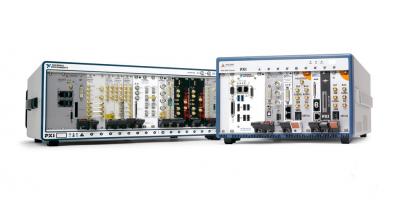

Description
The NI GPIB-USB-HS+ is a high-speed GPIB controller device that enables a computer to communicate with GPIB-enabled instruments. The device carries a part number 154939D-01L and falls under the category of GPIB. It is designed to interface with the computer via a USB 2.0 High Speed connection, providing a seamless and efficient data transfer experience.
Boasting an impressive transfer rate of up to 480 Mbps, this model ensures rapid communication between your computer and GPIB instruments. It is fully compatible with the IEEE 488.1/488.2 standards, guaranteeing a wide range of instrument compatibility and reliability in data transfer protocols.
One of the key advantages of the GPIB-USB-HS+ is its broad operating system support, including Windows, macOS, and Linux. This ensures that users can leverage the device’s capabilities across various computing environments, enhancing its versatility and application range. Furthermore, its USB bus-powered design eliminates the need for an external power supply, simplifying the setup and use while ensuring portability.
| Specification | Detail |
|---|---|
| Part Number | 154939D-01L |
| Category | GPIB |
| Model | GPIB-USB-HS+ |
| Short Description | NI GPIB-USB-HS+ |
| Interface | USB 2.0 High Speed |
| Transfer Rate | Up to 480 Mbps |
| Compatibility | IEEE 488.1/488.2 |
| Supported OS | Windows, macOS, Linux |
| Power | USB bus-powered |
Question 1: What is the transfer rate of the NI GPIB-USB-HS+?
Answer 1: Up to 480 Mbps
Question 2: Is the NI GPIB-USB-HS+ compatible with USB 2.0?
Answer 2: Yes, it’s USB 2.0 compatible.
Question 3: Can the GPIB-USB-HS+ be used with Linux?
Answer 3: Yes, it supports Windows, macOS, and Linux.
Question 4: Does the NI GPIB-USB-HS+ require an external power supply?
Answer 4: No, it’s USB bus-powered.
Question 5: Is the device compliant with IEEE 488.1/488.2 standards?
Answer 5: Yes, it follows IEEE 488.1/488.2 standards.