
Description
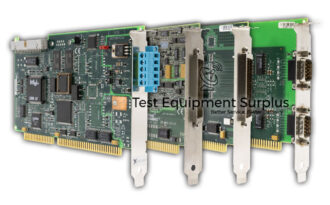
The Part Number 777357-01 is categorized under Automotive Networking Products and is named PCI-CAN. It is manufactured by National Instruments and features an Interface Type of ISO 11898 (TJA1041 transceiver). For connections, it utilizes either a 9-pin SUB-D connector or a 5-pin Combicon-style pluggable DeviceNet screw terminal.
The PCI-CAN model boasts a speed of up to 1000 kb/sec and provides optical isolation of up to 500 volts for enhanced safety and reliability. Software support for the device includes NI-CAN driver software, compatibility with programming environments such as LabVIEW, C/C++, and can be run on operating systems including Windows 2000/NT/XP/Me/98.
For configuration, the Measurement & Automation Explorer (MAX) tool is used. The PCI-CAN requires a power supply of 800 mA at +5 VDC and has physical dimensions of 4.2 x 6.9 in. It operates within a temperature range of 0 to 55 °C and should be stored in temperatures ranging from –20 to 70 °C. The operating humidity range is 10% to 90%, ensuring reliable performance across diverse environments.
| Specification | Details |
|---|---|
| Part Number | 777357-01 |
| Category | Automotive Networking Products |
| Model | PCI-CAN |
| Manufacturer | National Instruments |
| Interface Type | ISO 11898 (TJA1041 transceiver) |
| Connection | 9-pin SUB-D connector or 5-pin Combicon-style pluggable DeviceNet screw terminal |
| Speed | Up to 1000 kb/sec |
| Optical Isolation | Up to 500 volts |
| Software Support | NI-CAN driver software, LabVIEW, C/C++, Windows 2000/NT/XP/Me/98 |
| Configuration Tool | Measurement & Automation Explorer (MAX) |
| Power Requirement | 800 mA at +5 VDC |
| Physical Dimensions | 4.2 x 6.9 in. |
| Operating Temperature Range | 0 to 55 °C |
| Storage Temperature Range | –20 to 70 °C |
| Operating Humidity Range | 10% to 90%,
Question 1: What is the speed of the PCI-CAN 777357-01? Question 2: What interface type does the PCI-CAN use? Question 3: What is the operating temperature range of the PCI-CAN? Question 4: What software is supported by the PCI-CAN? Question 5: What connectors does the PCI-CAN use? |