
Description
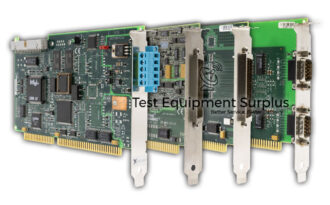
The product with the part number 777357-01 falls under the category of Automotive Networking Products. It is a PCI-CAN model manufactured by National Instruments. This device leverages the ISO 11898 interface type, specifically designed for high-speed CAN operations. It features a TJA1041 transceiver and supports a variety of connector types, including a 9-pin SUB-D and a 5-pin Combicon-style pluggable DeviceNet screw terminal.
The maximum operational speed of this device reaches up to 1000 kb/sec, with optical isolation capable of withstanding up to 500 volts, ensuring safety and reliability in automotive networking environments. It is compatible with several operating systems, including Windows 2000/NT/XP/Me/98, thereby offering versatility in various software setups.
Software support includes compatibility with LabVIEW, C or C++, and it requires NI-CAN driver software for optimal performance. The device’s power requirement is 800 mA at +5 VDC, and it comes equipped with Measurement & Automation Explorer (MAX) as its configuration tool. The physical dimensions of this product are 4.2 x 6.9 inches, making it a compact solution for automotive networking needs. It operates efficiently within a temperature range of 0 to 55 °C, ensuring reliability across a wide range of environmental conditions.
| Specification | Details |
|---|---|
| Part Number | 777357-01 |
| Category | Automotive Networking Products |
| Model | PCI-CAN |
| Manufacturer | National Instruments |
| Interface Type | ISO 11898 (High-speed CAN) |
| Transceiver | TJA1041 |
| Connector Type | 9-pin SUB-D; 5-pin Combicon-style pluggable DeviceNet screw terminal |
| Maximum Speed | 1000 kb/sec |
| Optical Isolation | Up to 500 volts |
| Compatible Operating Systems | Windows 2000/NT/XP/Me/98 |
| Software Support | LabVIEW, C or C++, NI-CAN driver software |
| Power Requirement | 800 mA at +5 VDC |
| Configuration Tool | Measurement & Automation Explorer (MAX) |
| Physical Dimensions | 4.2 x 6.9 in. |
| Operating Temperature Range | 0 to 55 °C |
|
Question 1: What is the part number of the PCI-CAN device? Question 2: What interface does the PCI-CAN use? Question 3: What is the operational speed of the PCI-CAN? Question 4: What type of isolation does the PCI-CAN have? Question 5: What is the power requirement of the PCI-CAN? |