
Description
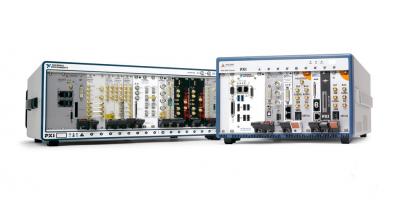
The Part Number 778283-01 refers to a high-performance device categorized under RF Downconverters, specifically the model PXI-5600. This device is designed to operate with a real-time bandwidth of 20 MHz, accommodating a broad frequency range from 9 kHz to 2.7 GHz. It stands out for its exceptional noise density of less than -140 dBm/Hz, alongside a remarkable phase noise performance of less than -94 dBc/Hz at a 10 kHz offset.
The timebase stability is maintained within ±20 ppb, ensuring high precision, while the timebase accuracy is held within ±50 ppb. When it comes to dynamic range, this device boasts a spurious-free dynamic range of more than 80 dB, making it highly reliable for various applications. Further enhancing its reliability is the input signal repeatability, which is less than 0.2 dB, and an amplitude error compensation of less than 0.2 dB over a 20 °C temperature change.
For software integration, it requires NI-RFSA 2.1, NIPXI-5600 Support, and an Application Development Environment. Connectivity is facilitated through various connectors, including FREQ REF IN, 10 MHz OUT, PXI 10 MHz I/O, OUTPUT, and INPUT. Lastly, it is important to note that the device has a warm-up time of 20 minutes before it can perform at its best.
| Specification | Details |
|---|---|
| Part Number | 778283-01 |
| Category | RF Downconverters |
| Model | PXI-5600 |
| Real-time Bandwidth | 20 MHz |
| Frequency Range | 9 kHz to 2.7 GHz |
| Noise Density | < -140 dBm/Hz |
| Phase Noise | < -94 dBc/Hz at 10 kHz offset |
| Timebase Stability | ±20 ppb |
| Timebase Accuracy | ±50 ppb |
| Spurious-free Dynamic Range | > 80 dB |
| Input Signal Repeatability | < 0.2 dB |
| Amplitude Error Compensation | < 0.2 dB over 20 °C change |
| Software Requirements | NI-RFSA 2.1, NIPXI-5600 Support, Application Development Environment |
| Connectors | FREQ REF IN, 10 MHz OUT, PXI 10 MHz I/O, OUTPUT, INPUT |
| Warm-up Time | 20 minutesQuestion 1: What is the real-time bandwidth of the PXI-5600? Answer 1: 20 MHz Question 2: What frequency range does the PXI-5600 cover? Question 3: What is the noise density of the PXI-5600? Question 5: What is the input signal repeatability of the PXI-5600? Related Products |