
Description
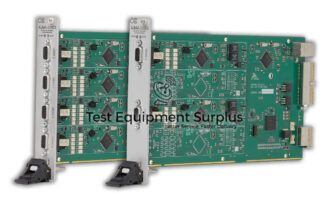
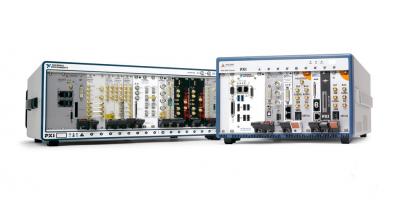
The PXIe-5665 is a high-performance Vector Signal Analyzer manufactured by National Instruments. It is designed to meet the demanding requirements of modern RF signal analysis. The model PXIe-5665 supports a wide range of part numbers including 781426-01, 781426-02, 781426-03, 781428-03, 781774-01, 781428-04, 781775-01, 781774-02, 781775-02, 781995-01, 781996-01, 781774-03, 781775-03, 781995-02, and 781996-02.
This Vector Signal Analyzer operates over a frequency measurement bandwidth from 20 Hz to 14 GHz, with a resolution bandwidth that is typically 3 dB. It incorporates an internal frequency reference of 10 MHz and utilizes advanced three-stage superheterodyne technology for precise signal analysis. The PXIe-5665 supports RF list mode and various modulation schemes, making it versatile for a wide range of applications.
Applications for the PXIe-5665 are diverse, including but not limited to GSM, EDGE, WCDMA, and Bluetooth. It is equipped to handle demanding signal environments with a noise value of -165 dBm/Hz in the range of 300 MHz to 1.7 GHz. Additionally, it features onboard memory of up to 256 MB, allowing for efficient processing and storage of complex signal data.
| Specification | Details |
|---|---|
| Manufacturer | National Instruments |
| Model | PXIe-5665 |
| Category | Vector Signal Analyzers |
| Part Numbers | 781426-01, 781426-02, 781426-03, 781428-03, 781774-01, 781428-04, 781775-01, 781774-02, 781775-02, 781995-01, 781996-01, 781774-03, 781775-03, 781995-02, 781996-02 |
| Frequency Measurement Bandwidth | 20 Hz to 14 GHz |
| Resolution Bandwidth | 3 dB (typical) |
| Internal Frequency Reference | 10 MHz |
| Technology | Three-stage superheterodyne |
| RF List Mode | Supported |
| Modulation Schemes | Supported |
| Applications | GSM, EDGE, WCDMA, Bluetooth, etc. |
| Noise Value | -165 dBm/Hz (300 MHz to 1.7 GHz) |
| Onboard Memory | Up to 256 MB |
|
Question 1: What is the frequency range of the PXIe-5665? Question 2: What is the internal frequency reference of PXIe-5665? Question 3: What technology does PXIe-5665 use for signal analysis? Question 4: What is the noise value of PXIe-5665 from 300 MHz to 1.7 GHz? Question 5: How much onboard memory does the PXIe-5665 have? Related Products |