
Description
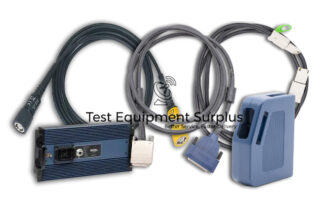
The 783629-01 is a part of the PXI Oscilloscopes/Digitizers category, specifically the SP500X model. It is designed as a flexible, passive probe that features a fixed BNC connector, which terminates into an adapter. This design ensures compatibility with various measurement clips and plugs, making it a versatile tool for a range of applications.
One of the key specifications of this probe is its attenuation ratio of 10:1, allowing for precise measurements across a wide range of signal strengths. Additionally, it boasts a frequency band capability from DC to 500 MHz, coupled with a rise time of 0.9 ns, ensuring high performance in fast-paced environments.
The total length of the probe is 1.20 meters, providing ample flexibility for maneuvering in various settings. Moreover, it is designed to operate within a temperature range of 5 °C to 40 °C, ensuring reliability and accuracy in different working conditions.
| Specification | Detail |
|---|---|
| Part Number | 783629-01 |
| Category | PXI Oscilloscopes/Digitizers |
| Model | SP500X |
| Type | Flexible, Passive Probe |
| Connection | Fixed BNC connector, terminates into an adapter |
| Compatibility | Various measurement clips and plugs |
| Attenuation Ratio | 10:1 |
| Frequency Band | DC to 500 MHz |
| Rise Time | 0.9 ns |
| Total Length | 1.20 meter |
| Operating Temperature Range | 5 °C to 40 °C |
Question 1: What is the part number for the SP500X?
Answer 1: The part number is 783629-01.
Question 2: What is the frequency range of the SP500X probe?
Answer 2: It operates from DC to 500 MHz.
Question 3: What is the attenuation ratio of the SP500X?
Answer 3: The attenuation ratio is 10:1.
Question 4: What type of connector does the SP500X use?
Answer 4: It uses a fixed BNC connector.
Question 5: What is the rise time of the SP500X probe?
Answer 5: The rise time is 0.9 ns.