
Description
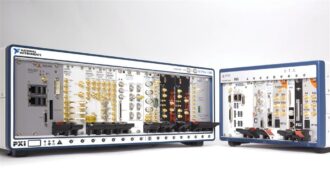
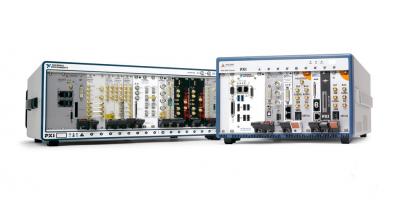
The PXIe-5186 is a state-of-the-art PXI Oscilloscope/Digitizer that comes with part numbers 782058-01 and 782058-02. This high-performance model is designed to cater to a wide range of testing and measurement needs in various applications.
It boasts an impressive sampling rate of 250 GS/s using Random Interleaved Sampling (RIS), making it ideal for capturing high-speed signals. The maximum bandwidth capability of the PXIe-5186 reaches up to 5 GHz, with a specific bandwidth of 500 MHz on the 1 MΩ path. This allows for precise measurements across a broad frequency range.
The input range of this oscilloscope/digitizer is quite flexible, ranging from 110 mVpk-pk to 10 Vpk-pk, accommodating a variety of signal strengths. Users can also select between 50 Ω or 1 MΩ input impedance, providing versatility in connection to different signal sources.
In terms of memory, the PXIe-5186 offers two options: 32 MB or 1 GB of onboard memory. This allows for extensive data capture and storage, suitable for in-depth analysis. The device features two 8-bit channels, enabling simultaneous measurement of multiple signals.
The maximum sampling rate of this device can reach up to 12.5 GS/s, ensuring high-resolution measurements. Moreover, it supports synchronization of less than 10 ps between channels of multiple oscilloscopes, facilitating coordinated multi-channel measurements.
One of the standout features of the PXIe-5186 is its self-calibration capability, which adjusts for DC gain and offset drifts, ensuring accurate and reliable measurements over time. Additionally, it comes equipped with an interactive soft front panel
Question 1: What is the max bandwidth of PXIe-5186?
Answer 1: 5 GHz
Question 2: What sampling rate does the PXIe-5186 offer?
Answer 2: 250 GS/s using RIS
Question 3: How much onboard memory can the PXIe-5186 have?
Answer 3: Up to 1 GB
Question 4: Does the PXIe-5186 support self-calibration?
Answer 4: Yes, it has self-calibration.
Question 5: What are the input impedance options for PXIe-5186?
Answer 5: 50 Ohm or 1 MOhm