
Description
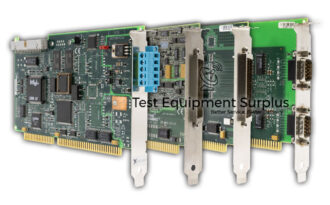
The PC-DIO-24 is a legacy DAQ device produced by National Instruments, designed to interface with TTL and CMOS compatibility. Its part number is 183873A-01, also available as 777368-01, belonging to the category of Legacy DAQ Devices. This model stands out for its ease of use, featuring a plug-and-play configuration without the need for an external card manager.
It operates through a connection method that utilizes 24-bit PPI chips, and it interfaces with the system via an ISA connection. The device has 24 channels and supports both uni-directional and bi-directional modes of operation, making it versatile for various data acquisition tasks. Connectivity is facilitated through a standard 50-pin male ribbon-cable connector, ensuring compatibility with a wide range of peripherals.
When it comes to performance, the PC-DIO-24 can achieve a maximum transfer rate of up to 50 Kbytes/s with NI-DAQ software, and maintains a typical constant transfer rate between 1-10 Kbytes/s. It operates efficiently within an operating relative humidity range of 5% to 90% noncondensing, ensuring reliability in various environmental conditions. The device’s maximum voltage rating is between -0.5 to +5.5 V with respect to GND, accommodating a wide range of power supplies and ensuring safe operation.
| Specification | Detail |
|---|---|
| Part Number | 183873A-01 (Available as 777368-01) |
| Category | Legacy DAQ Devices |
| Model | PC-DIO-24 |
| Manufacturer | National Instruments |
| Compatibility | TTL, CMOS |
| Connection Method | 24-bit PPI chips |
| Configuration | Plug-and-play, No external card manager required |
| Interface | ISA |
| Number of Channels | 24 |
| Mode of Operation | Uni-directional, Bi-directional |
| Connector | Standard 50-pin male ribbon-cable |
| Maximum Transfer Rate | Up to 50 Kbytes/s with NI-DAQ software |
| Typical Constant Transfer Rate | 1-10 Kbytes/s |
| Operating Relative Humidity | 5% to 90% Noncondensing |
| Maximum Voltage Rating | -0.5 to +5.5 V with respect to GND |
| Output Voltage (Pin
Question 1: What’s the max transfer rate of PC-DIO-24? Question 2: Does PC-DIO-24 support TTL and CMOS? Question 3: What interface does PC-DIO-24 use? Question 4: How many channels does PC-DIO-24 have? Question 5: What’s the operating humidity range of PC-DIO-24? |