
Description
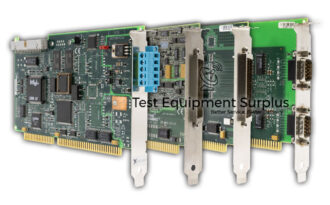
The Part Number 777744-01 refers to a PC-based Multifunction DAQ system, specifically the model PCI-6025E. This device is capable of a sample rate of up to 200 kS/s and boasts a resolution of 12 bits. It offers flexibility in data acquisition with 16 single-ended or 8 differential analog input channels and includes 2 analog output channels.
For tasks that require precise timing and counting, this DAQ system includes 2 built-in 24-bit counters. It operates safely within a maximum working voltage of ± 11 volts (from ground). The update rate can reach up to 10 kHz, though this is system dependent. The device employs a multiplying double-buffered DAC for its digital-to-analog conversion needs.
Regarding its trigger capabilities, it can be set to activate on either a rising or falling edge, with a minimum pulse width of 10 ns. To ensure optimal performance, a recommended warm-up time of 15 minutes is advised. To maintain accuracy and reliability, calibration is recommended on a yearly basis.
The DAQ’s physical attributes include a weight of 4.1 oz. and dimensions measuring 6.9 inches in length. This compact and robust design makes it an ideal choice for a wide range of data acquisition applications.
| Specification | Detail |
|---|---|
| Part Number | 777744-01 |
| Category | PC-based Multifunction DAQ |
| Model | PCI-6025E |
| Sample Rate | 200 kS/s |
| Resolution | 12 bits |
| Analog Input Channels | 16 single-ended or 8 differential |
| Analog Output Channels | 2 |
| Built-in Counters | 2 (24-bit) |
| Maximum Working Voltage | ± 11 volts (from ground) |
| Update Rate | 10 kHz (system dependent) |
| DAC Type | Multiplying double buffered DAC |
| Trigger Capabilities | Rising or falling edge |
| Pulse Width | 10 ns min. |
| Recommended Warm-up Time | 15 minutes |
| Calibration Frequency | Yearly |
| Weight | 4.1 oz. |
| Dimensions | 6.9
Question 1: What is the sample rate of the PCI-6025E? Question 2: How many analog input channels does it support? Question 3: What is the resolution of the PCI-6025E? Question 4: What is the maximum working voltage? Question 5: How often is calibration recommended? |