
Description
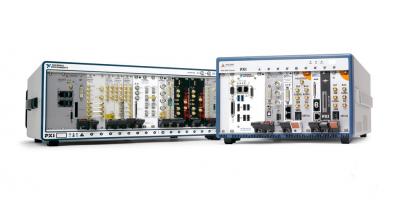
The Part Number 778737-01 identifies a specific RF Upconverter, model PXI-5610. This device is designed to fit into a 2-slot, 3U PXI module, ensuring compatibility with standard PXI racks. The PXI-5610 operates over a frequency range from 250 kHz to 2.7 GHz, offering a continuous bandwidth of 20 MHz. It provides an output power range from -145 dBm to +10 dBm, along with 130 dB of flexible gain, making it versatile for various RF applications.
The unit boasts a timebase stability of ±50 parts per billion (ppb), ensuring reliable performance over time. Users can leverage high-accuracy Oven-Controlled Crystal Oscillator (OCXO), an external reference clock, or the PXI backplane as reference clock sources, providing flexibility in synchronization across different systems. With an operational temperature range from 0 °C to 55 °C, the PXI-5610 can perform in a variety of environmental conditions.
It is recommended that the device undergoes calibration every 1 year to maintain accuracy and performance. The PXI-5610 is compatible with Windows 2000/NT/XP operating systems, and supports LabVIEW and LabWindows/CVI driver software, facilitating easy integration into existing systems. The device weighs 41.1 oz., and its dimensions ensure that it does not occupy excessive space within the PXI chassis.
| Specification | Detail |
|---|---|
| Part Number | 778737-01 |
| Model | PXI-5610 |
| Category | RF Upconverters |
| Form Factor | 2-slot, 3U PXI module |
| Operating Frequency Range | 250 kHz to 2.7 GHz |
| Continuous Bandwidth | 20 MHz |
| Output Power Range | -145 dBm to +10 dBm |
| Gain | 130 dB of flexible gain |
| Timebase Stability | ±50 ppb |
| Reference Clock Sources | High-accuracy OCXO, external reference clock, PXI backplane |
| Temperature Range | 0 °C to 55 °C |
| Recommended Calibration Interval | 1 year |
| Compatible Operating Systems | Windows 2000/NT/XP |
| Driver Software | LabVIEW, LabWindows/CVI |
| Weight | 41.1 oz. |
| Dimensions (W x H
Question 1: What is the frequency range of the PXI-5610? Question 2: How much gain does the PXI-5610 offer? Question 3: What is the temperature range the PXI-5610 operates in? Question 4: What is the timebase stability of the PXI-5610? Question 5: How often does the PXI-5610 need calibration? |